
dossier
Pathways to Justice for Ukraine

Russia’s war of aggression against Ukraine has prompted a debate on how to best …
00:00:00
00:00:00
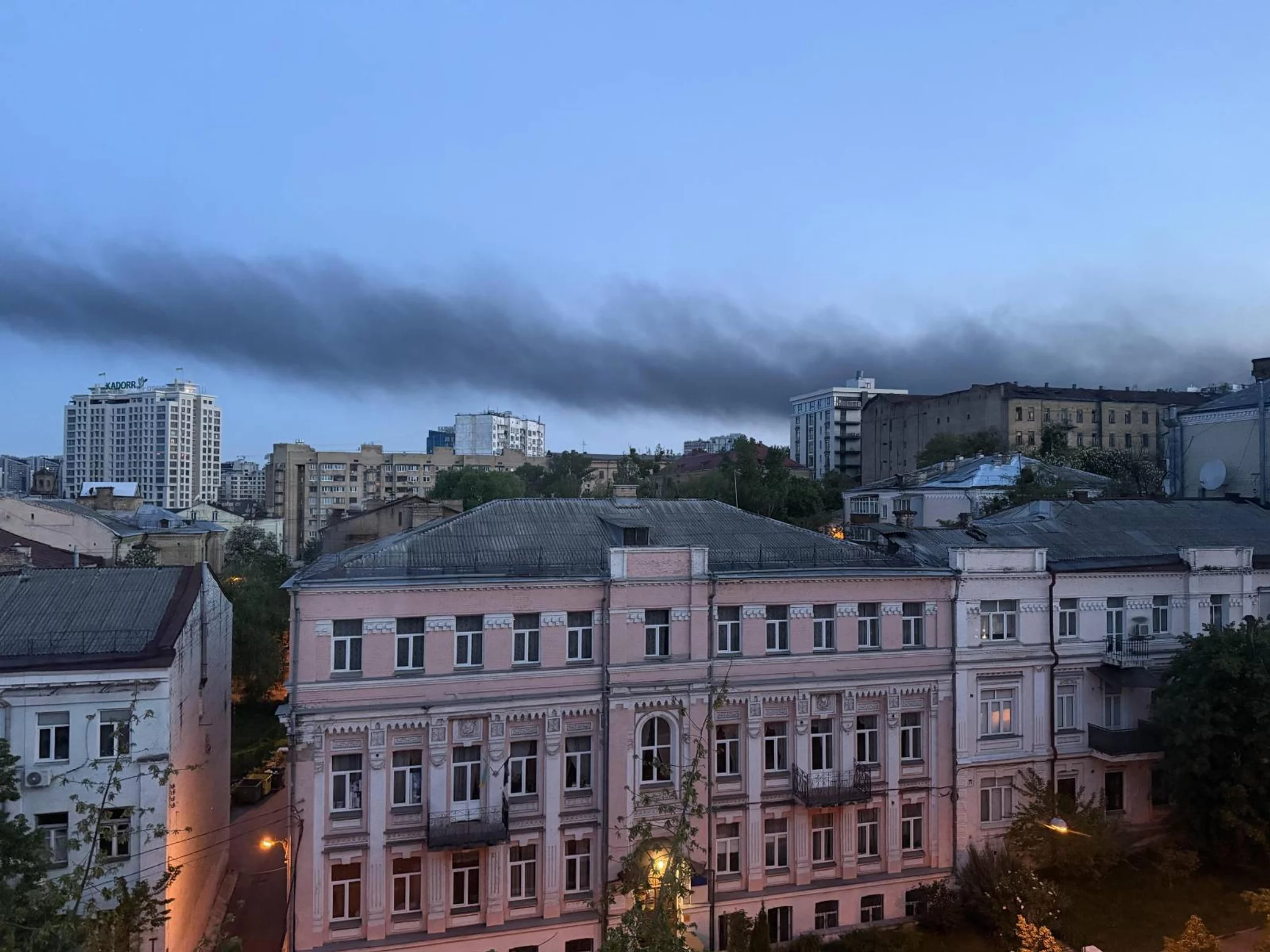
They say, “there is only so much a man can take”. Yet it seems that we, Ukrainians, have been taking… and taking… and taking.
Our limits have truly been put to the test for the past 12 years. From being woken up to the sounds of missile strikes at 5am, having to explain the sounds of the explosions to our children, all the while reckoning with the truth that our lives could at any moment come to an end or otherwise be altered forever, what we have endured has been a living nightmare. Some of us have survived, but too many of us have not – after all, this war has been called the most brutal war in Europe since the Second World War. This past winter is a perfect testament to this. Four years into Russia’s full-scale invasion and 12 years into the war, the death toll among military and civilians continues to climb. There has been a flurry of political fuss and mostly empty political declarations from top politicians from different states, most notably from the Trump administration. In this space, real peace seems as far away as ever.
And our worst nightmare was about to become even worse. It is not enough that to some decision makers a battlefield death is merely another statistical number; that for civilians survival has become the new expected normal; that standing up for one’s country is treated as insolent behavior; and that chastising someone on live TV for not wearing a suit at the time of war becomes an item on the agenda of a high-level meeting. It seems that we have been surviving this war in a climate not only of shifting narratives, deepfakes, and mind-numbing propaganda, but, most dangerously, of ever-changing existential values.
As President Trump has claimed for himself the role of peace broker in Ukraine, it seems that Ukraine’s and Europe’s political leadership have inadvertently relinquished this responsibility and continue to do so despite the uncertain signals and demands from the U.S. administration. I wonder why that is. Is this because of Ukraine and Europe’s inability to negotiate peace on their own merit? Or are we still trapped in the Cold War paradigm whereby Russia considers the United States its only worthy adversary it is willing to listen to and negotiate with? And if that is indeed the case, does it not suggest that Europe and Ukraine lack sufficient agency and power on the world stage? If so, is it not a good time to identify the root causes?
I once had a remarkable conversation about justice and accountability with one of the top diplomats to Ukraine. I asked him whether, when they say that this or that is “Ukraine’s” decision, who they mean by “Ukraine”: the political leadership or the people of Ukraine? After thinking on it a minute, the diplomat answered, “more likely, the political leadership.” I already knew this would be the answer even before I asked, but, hearing him articulate it out loud still felt like a cold shower. Here we are, the people trying to fight for our freedom, for our democratic values, for our and our children’s future, only to hear that our voices are irrelevant in the grand scheme of things. And here lies the problem. All things considered, I cannot say that I do not understand the logic behind his answer. After all, on paper Ukraine’s political leadership is a democratically elected one by the people of Ukraine. However, it has been 7 years since they were elected, and the big promises they made back then turned out to be empty. Despite declarations to the contrary, no effective measures to combat corruption or meaningful reforms of the legal system have been implemented. As the war continues to rage, Ukraine has not managed to reclaim the territories and people lost to the occupation, yet even more tragic is the growing tendency to treat those people by default as collaborators and/or traitors. Furthermore, military drafting is also getting out of hand, with the state literally torturing and murdering its own men who are trying to not die in the war. At the same time, it is doing next to nothing to ensure that veterans are physically and mentally taken care of. Instead of finding people-centered solutions, political leadership continues to build a tight and oppressive system rooted in corruption and little to no competence. Yet, the war has trapped us in a political impasse, because holding elections while the active fighting continues would be an incredibly problematic call.
Therefore, for Ukraine’s international partners to make fundamental decisions intended to benefit the people of Ukraine solely on the basis of this political leadership’s views, while disregarding the voices of the people themselves, would be both perfidious and profoundly short-sighted under the circumstances. Because in the end it is us, the Ukrainian people, who will have to rebuild our country; it is us, the Ukrainian people, who will have to stay and live through the consequences of this war. It is definitely not the political leadership that has been dying on the battlefield from enemy bullets, drone, or missile strikes. It is not the political leadership that has spent years in captivity, enduring torture and starvation. And, ultimately, it is not only the political leadership that needs justice, accountability, the restoration of hope and renewed faith in humanity. It is the people of Ukraine. That is why peace negotiation strategies and state policies aimed at rebuilding Ukraine should be guided by the voice of the people – whatever that voice may say.
This approach was beautifully depicted in “Darkest Hour,”, the screen adaptation of what was likely a fictionalised – nonetheless compelling – portrayal of Winston Churchill’s decision-making process regarding the fate of the United Kingdom during World War II. In 1940, confronted with the immense dilemma of whether to begin peace negotiations with Germany or continue fighting Hitler’s regime, Churchill decides, on his way to Westminster, to travel on the London underground. It was his way to get closer to the people, to listen to the opinions and thoughts of ordinary working-class citizens. Inspired by them, he ultimately chooses to fight Nazi Germany based on and reinforced by public opinion, although the price that was ultimately paid was incredibly high.
It would have been wise for the Government of Ukraine to be more in touch with their own people which can be done via regular authentic opinion polls and genuine consultations with all segments of society. For example, in respect to justice and accountability, ULAG’s practice is to commission public opinion polls, which consistently show that people not only expect justice, but consider it essential to overcome the consequences of the war. They expect that Russia’s political leadership will be held accountable, that victims will be recognized, that those who gave their lives in this war will be properly remembered, and that prisoners of war and civilians held in Russian captivity will be safely returned home. They want their stories to be heard in courtrooms, to have the chance to look into the eyes of the perpetrators, to access real justice, and to receive adequate compensation.
At the same time, Ukrainians who were forced to stay in the occupied territories for a number of legitimate reasons do not want to live in fear of being accused, prosecuted, imprisoned, or even exchanged as alleged “collaborators” – a practice that the Ukrainian government uses for securing the return of Ukrainians civilians from unlawful Russian detention. It also serves as a convenient statistical tool for the domestic justice system to demonstrate its supposed effectiveness and efficiency. All of this is happening in the fog of Ukraine’s stated commitment to the principles of transitional justice.
As peace talks are underway, the real question is whether effective justice can be delivered under these circumstances. Granted, the outcome of the peace talks will be heavily influenced by the outcome on the battlefield. Therefore, it is essential that Ukraine receives military and strategic support from its partners, especially the EU, which can and should support Ukraine, particularly given the broader threat of a third world war and Russia’s proximity to some EU states. But if and once a military advantage is gained, would we then be able to rely on true leaders who genuinely listen to the voice of the people and are prepared to take responsibility for making difficult but fair decisions – both in terms of necessary reforms in the military and legal sectors and the appointment of more competent government officials?
A case in point here is the position of Minister of Justice, which has been vacant for the past six months. While we adopt EU accession reforms at sonic speed, priority is given to form over substance, to the satisfaction of both Ukraine and the EU. But will this satisfy the people of Ukraine? The answer to this question seems to be irrelevant to most and this, in my opinion, is a very dangerous path to be on.
Yours, Nadia Volkova
Founder and Director of Ukrainian Legal Advisory Group (ULAG)
Nadia Volkova is an international human rights lawyer with more than 15 years of experience in war crimes accountability, transitional justice, and international litigation. She is the founder and director of the Ukrainian Legal Advisory Group (ULAG), which provides legal support to victims of conflict-related violations, advises Ukrainian authorities on international legal standards, and was one of the convenors, alongside other leading Ukrainian NGOs, of the Ukraine 5AM Coalition advocating for justice on war crimes. She also advises the law firm Azones on armed conflict-related cases under Ukrainian and UK law, and serves as Legal Advisor to Ukrainian Archive, Mnemonic, on the documentation of war crimes and the use of OSINT evidence. Nadia has litigated extensively before Ukrainian courts and the European Court of Human Rights, and she advises governments, NGOs, and international organisations — including the UN, EU, and Council of Europe — on accountability mechanisms and victim-centred justice. She was awarded the CCBE Human Rights Award in 2022.
LOA is part of ECCHR. We are a human rights organization that relies solely on independent funding and donations from its community. Support our work with a donation!
Thank you for supporting our work for a world free from exploitation, fortressed borders, and torture. Receive regular information and updates in our ECCHR newsletter—subscribe now!